




Latest news
A coalition of European tourism and travel associations, composed of ECTAA, EFCO&HPA, ETOA, HOTREC and RuralTour welcomes the European Commission's decision to open an infringement procedure against Spain concerning Royal Decree 933/2021 and its compatibility with the EU Law Enforcement Directive.
The Commission announced on Thursday 4 June that it had sent a Letter of Formal Notice to Spain, expressing concerns that the country's traveller data collection requirements may breach EU data protection rules. The Commission specifically questions the excessive categories of personal data collected, including payment and location-related information, the broad access granted to law enforcement authorities, and the three-year retention period.
28/05/2026 ECTAA Elects New President and Executive Board for 2026–2028
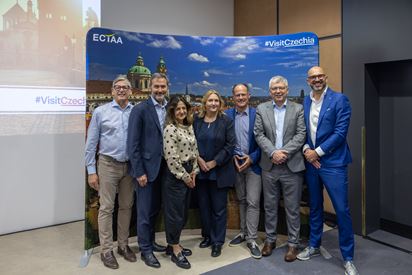
At its 132nd semi-annual meeting held in Prague and hosted by the Czech travel association ACCKA and Czech Tourism, the European Travel Agents’ and Tour Operators’ Association elected Heli Mäki-Fränti as President of ECTAA for the 2026–2028 mandate.
As the newly elected President, Heli Mäki-Fränti brings extensive experience and long-standing involvement in the travel and tourism sector at both national and European level. CEO of the Association of Finnish Travel Industry (SMAL), she has led the Finnish association since 2007 and has served as Vice-President of ECTAA since 2022. Throughout her career, she has been actively involved in travel policy, sustainable tourism and EU advocacy, contributing to the representation of the sector in key legislative discussions at European level.
13/05/2026 ECTAA backs EU passenger package, but flags competition risks
ECTAA welcomes today’s adoption by the European Commission of the new passenger package, including proposals on Rail Ticketing, Multimodal Digital Mobility Services (MDMS) and revised Rail Passenger Rights. The package reflects the Commission’s ambition to promote more sustainable rail and multimodal travel across Europe while improving the passenger experience.
While these objectives are both commendable and long overdue, ECTAA questions whether the proposed measures will ultimately deliver a truly competitive, open and consumer-friendly multimodal market — particularly in relation to the proposed Rail Ticketing Regulation.
with the support of CzechTourism
Destination Partner 2026 - Czechia